
Mossman Gorge history on Eastern Kuku Yalanji Country
Mossman Gorge history is inseparable from the Eastern Kuku Yalanji, the Traditional Owners of this Country. Their relationship with the rainforest is a living one, encompassing cultural knowledge, family connections and the meaning of places. Approach a visit as time on Country, rather than reading the landscape solely through the dates when government protection began.
The Mossman River shaped the steep-sided valley, with large granite boulders in its bed and rainforest across the wet lowlands. The physical landscape and its cultural meaning belong together in understanding the place. QPWS identifies features such as Manjal Dimbi, also known as Mount Demi, as having cultural and spiritual significance for the Eastern Kuku Yalanji.
A walk with a cultural guide offers a way to hear local interpretation while visiting the rainforest. The cultural walks guide explains booking choices, while this page follows the relationship between Country, conservation and land ownership. Use the Mossman Gorge overview to put those themes alongside the practical parts of your visit.
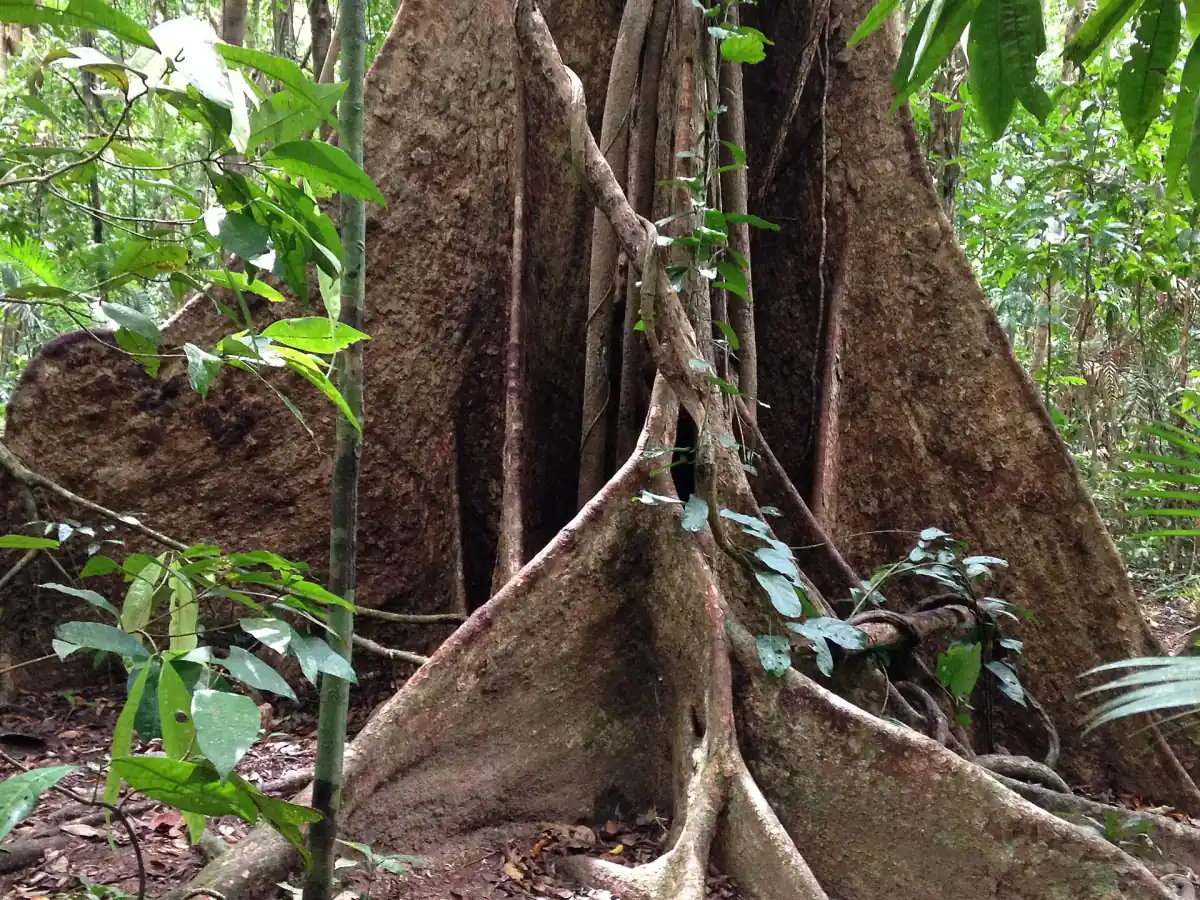
Living knowledge of rainforest and seasons
QPWS describes Eastern Kuku Yalanji seasonal knowledge of food, plants, animals and weather cycles. The Centre also describes knowledge being passed within families and by Elders. These connections help explain why cultural interpretation involves more than identifying a tree or remembering a date: it relates the forest to people and to knowledge shared across generations.
Listen to the interpretation offered by local guides and keep it attached to this Country. An account of Eastern Kuku Yalanji knowledge should retain its local context rather than stand in for all Indigenous cultures. When a guide discusses traditional plant uses, understand that as cultural interpretation. The experience is an opportunity to learn from the guide, rather than a set of instructions to practise ceremonies or use plants yourself.
A cultural day on Country
Traditional Custodian guides share cultural knowledge on this guided day.
Hand-picked tours, booked through GetYourGuide. Prices are indicative starting prices in Australian dollars (as of October 2026). Tap a tour for live availability and the current price in your currency.
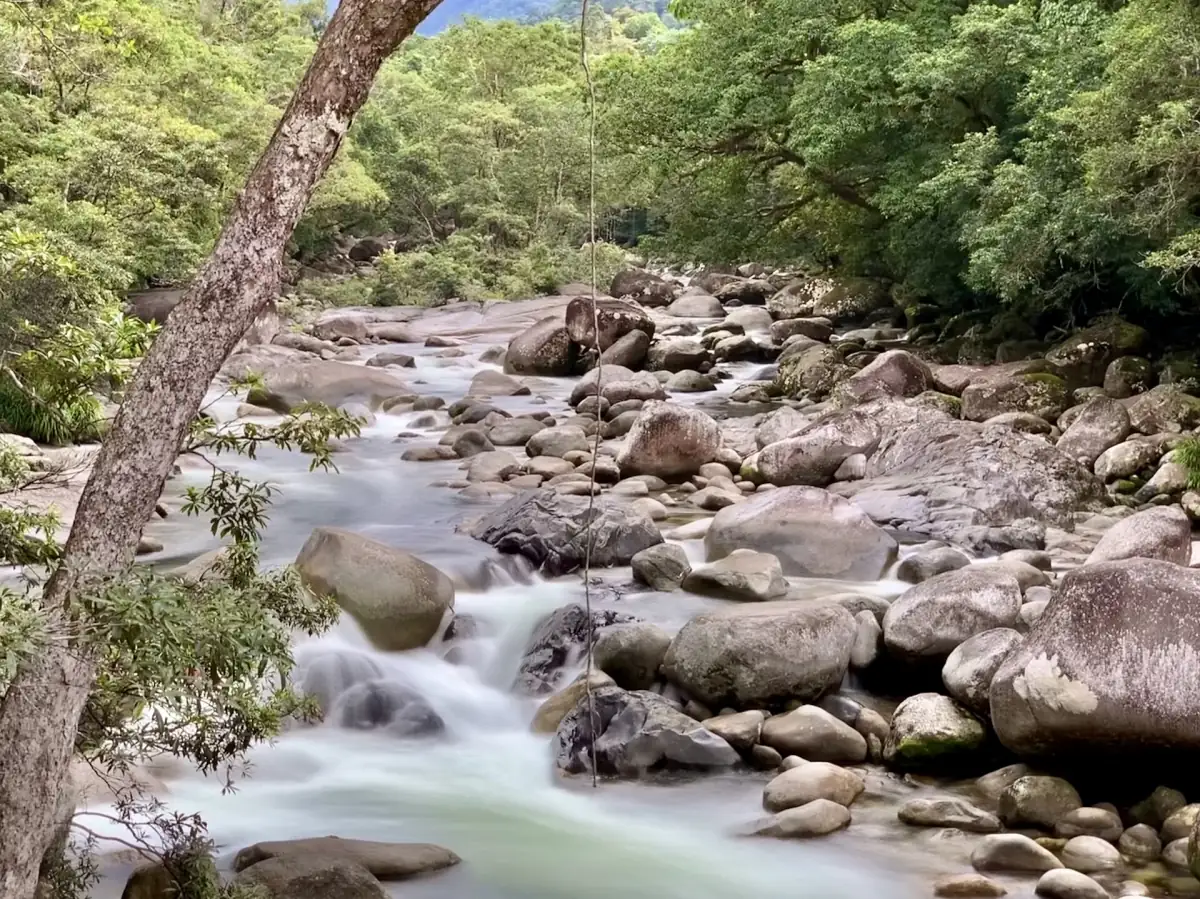
Hear local history with Traditional Custodian guides
A cultural day with a guided Mossman Gorge walk, stories and knowledge shared by Traditional Custodians, lunch on Country and hotel pickup and return in Port Douglas.
National Park designation and World Heritage protection
QPWS dates designation of the Mossman Gorge part of the National Park to 1967. European forestry and agricultural clearing changed the surrounding region. That conservation date is a chapter in the area's administrative history, while the Eastern Kuku Yalanji relationship with Country extends beyond the beginning of National Park protection.
In 1988, the Wet Tropics of Queensland was inscribed on the UNESCO World Heritage List. Mossman Gorge belongs to that wider World Heritage area. The inscription concerns a broader protected landscape, rather than a separate World Heritage listing for the gorge alone. Keeping the names distinct helps when reading about the park and deciding which part you intend to visit.
The boulders, river and rainforest are therefore encountered within overlapping natural and cultural contexts. Public walking paths provide access to the landscape; guided cultural interpretation adds a different way to understand it. For the practical differences between routes, turn to the public walks and bridge guide rather than choosing a trail simply because it appears in a historical account.
The land handbacks of 2021 and 2026
On 29 September 2021, Queensland announced the return of more than 160,000 hectares and joint management of Daintree, Ngalba-bulal, Kalkajaka and Hope Islands by the Eastern Kuku Yalanji and Queensland. This is a dated historical event covering several protected areas. The figure should be read in that regional context, rather than as the size of Mossman Gorge itself.
A further Queensland announcement on 22 June 2026 described the handback of more than 28 hectares of Daintree rainforest to the Eastern Kuku Yalanji, with inclusion in Daintree National Park intended. It identified Jabalbina Yalanji Aboriginal Corporation as the recipient on their behalf. This later announcement provides its own context of Aboriginal ownership alongside National Park status.
Traditional ownership, joint National Park management and operation of a visitor centre are different roles. Keep them distinct when choosing an experience or reading about land handbacks. Returning land and managing protected country do not amount to a statement that every tourism operation is run by the same body. The significance of the handbacks lies in their relationship to Country and the protected landscape.
Learning respectfully during your visit
Ngadiku Dreamtime Walks are locally guided cultural experiences using private paths to culturally significant places. They require advance booking and are separate from independently exploring the public walking routes. Stay with the arrangements for your chosen visit and respect the privacy of the residential community rather than treating it as a shortcut to the gorge.
The cultural day presented here includes a guided Mossman Gorge walk with Traditional Custodians, stories, history and cultural knowledge, lunch on Country, and hotel pickup and return from Port Douglas. It is a broader cultural outing; use the dedicated cultural walks page to compare experiences rather than treating every guided visit as the same local walk ticket.
This is an independent visitor guide. Use it to prepare your questions and understand the historical sequence, then give space to the people sharing their Country with you. Arrange your journey to the Centre separately from the experience itself so that you can arrive ready to listen without rushing the visit.
Questions about Mossman Gorge history
Who are the Traditional Owners?
The Eastern Kuku Yalanji are the Traditional Owners. Their connection to Country is a continuing cultural relationship, including knowledge of the rainforest and its seasons.
When did Mossman Gorge become part of the National Park?
QPWS dates designation of the Mossman Gorge section to 1967. That date concerns park protection, rather than the beginning of local cultural history.
Is Mossman Gorge a separate UNESCO World Heritage site?
It forms part of the wider Wet Tropics of Queensland World Heritage area, inscribed in 1988.
What happened in the 2021 land handback?
The Queensland announcement of 29 September 2021 covered the return of more than 160,000 hectares and joint management across several protected areas, including Daintree.